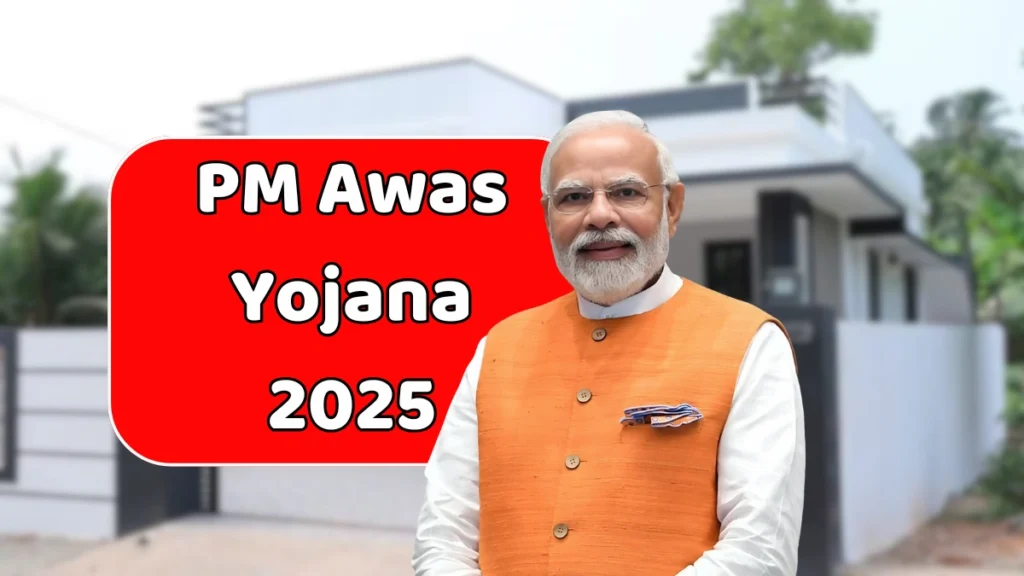
The Central Government’s flagship housing program, the Pradhan Mantri Awas Yojana Gramin (PMAY-G), continues to empower millions of rural families in 2025 by helping them build pucca houses with financial assistance of up to ₹1.20 lakh. The initiative is a key part of the “Housing for All” mission, ensuring every eligible family in rural India can move from kutcha houses to permanent, safe, and dignified homes.
What Is PM Awas Yojana and How It Works
Under the PM Awas Yojana Gramin scheme, the government provides financial aid to poor and homeless rural families for the construction of permanent houses equipped with basic facilities such as toilets, electricity, and clean drinking water. The scheme directly transfers funds to the beneficiary’s bank account in multiple installments, ensuring full transparency through Direct Benefit Transfer (DBT).
Beneficiaries in plain areas receive ₹1.20 lakh, while those in hilly regions, difficult terrain, or Naxal-affected districts can get up to ₹1.30 lakh. The entire amount is released in stages based on construction progress — starting from foundation laying, roof completion, and finally, house handover.
Eligibility Criteria for PMAY-G 2025
To qualify for the PMAY-G benefit, the applicant must belong to a rural household without a pucca house. Families living in kutcha houses made of mud or temporary materials are eligible for this scheme. The scheme gives top priority to SC/ST families, women-headed households, senior citizens, people with disabilities, and landless laborers.
Applicants must not own any pucca house anywhere in India in the name of themselves or any family member. Households owning vehicles, agricultural machinery, or higher income assets may not qualify under the selection list prepared using SECC (Socio-Economic Caste Census) data.
How to Apply for PM Awas Yojana Online
To apply online, visit the official PMAY-G portal or your state’s rural development department website. Applicants need to fill out the online registration form with details like name, Aadhaar number, bank account, mobile number, and residential address. The form should be supported with identity proof, land documents, and photographs of the existing kutcha house if applicable.
Once the application is submitted, authorities verify the data and include eligible beneficiaries in the final list. The approved applicants receive a confirmation message, and funds are then credited to their linked bank accounts in stages as per construction progress. The scheme ensures transparency through geo-tagged monitoring and digital verification of every constructed house.
Key Features and Benefits in 2025
PM Awas Yojana Gramin 2025 focuses on ensuring safe, permanent housing with facilities like sanitation, LPG connection, electricity, and clean water through convergence with other government schemes such as Ujjwala Yojana and Swachh Bharat Mission. The houses must meet the minimum size and design standards prescribed by the government, with a usable area of at least 25 square meters.
Each house is designed to withstand natural calamities and to provide long-term stability. The government also promotes environmentally friendly construction techniques and the use of locally available materials to reduce costs while maintaining quality.
Why This Scheme Matters
The PMAY-G scheme has been a game-changer for rural India, offering not just financial assistance but also dignity and stability. It has transformed lakhs of lives by turning temporary shelters into safe, weather-resistant homes. The continuation of the scheme in 2025 further reinforces the government’s vision of providing housing to every rural household and eliminating homelessness across India.
Conclusion: If you are a rural resident without a permanent home, the PM Awas Yojana Gramin 2025 is your opportunity to build a secure and permanent house with government support of up to ₹1.20 lakh. Eligible families should apply online or through their Gram Panchayat office to take advantage of this scheme. The transparent fund transfer system and guaranteed financial aid make it one of the most reliable government welfare programs in India.
Disclaimer: This article is based on publicly available government data and official PMAY-G guidelines. Readers should visit the official PMAY-G website or contact local authorities for the latest eligibility and application updates.