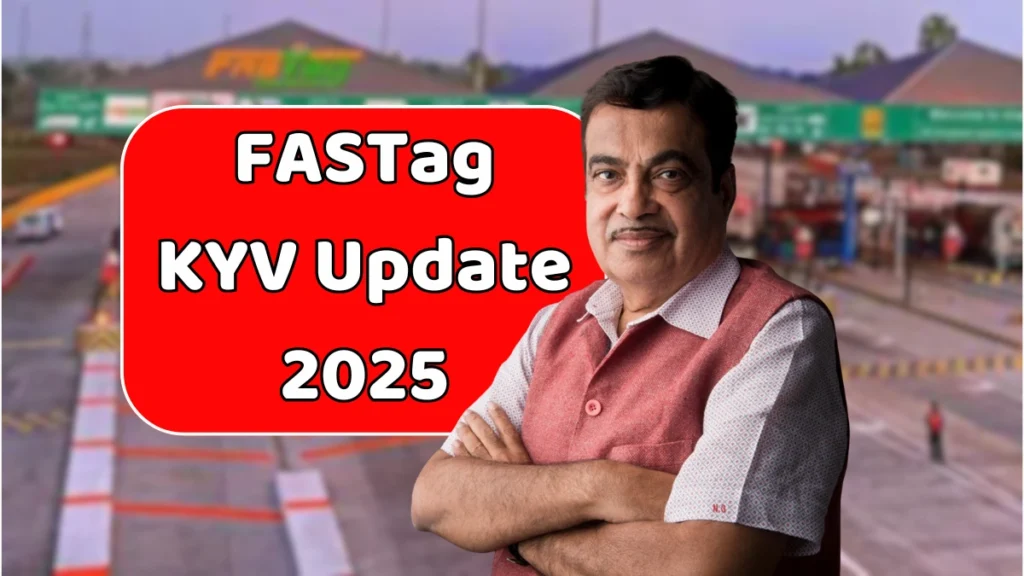
The National Highways Authority of India (NHAI) has announced a major simplification in the Know Your Vehicle (KYV) process for FASTag users, giving relief to millions of vehicle owners across the country. The move aims to make the system more user-friendly and reduce the risk of blacklisted or deactivated tags at toll plazas.
Under the new guidelines, NHAI has eliminated unnecessary steps in the KYV process, ensuring that FASTag verification can now be completed in just a few minutes through a simpler digital interface.
What Has Changed in the New KYV Process
Earlier, FASTag users had to upload multiple photographs of their vehicles, including side views and additional documents, to complete the KYV process. Now, NHAI has made the process easier by allowing users to upload only a front-facing photograph that clearly shows the vehicle’s number plate and the FASTag on the windshield.
Once users enter details such as their vehicle number, mobile number, or chassis number, the system automatically fetches the registration details from the government’s VAHAN database. This ensures faster verification and minimizes manual errors.
Importantly, FASTags issued before the introduction of the KYV rule will remain active unless a case of misuse or fraud is detected. Banks and FASTag issuers will now send reminder messages to users to complete their verification without facing any penalty or sudden deactivation.
Why NHAI Simplified the FASTag KYV System
The main goal behind this move is to prevent genuine users from facing unnecessary disruptions during toll payments. Earlier, thousands of FASTags were mistakenly blocked or blacklisted due to incomplete KYV submissions or technical errors.
With the simplified process, NHAI expects to enhance toll plaza efficiency and reduce waiting times, ensuring seamless travel for verified users. The authority also clarified that blacklisting will now occur only in proven cases of misuse, fraud, or duplicate tags.
NHAI’s new policy reflects its commitment to improving digital convenience and ensuring that no vehicle owner faces inconvenience while crossing toll plazas due to technical issues.
How to Complete FASTag KYV in the New System
Users can complete their FASTag KYV through their issuing bank’s official website, app, or the NHAI portal. The process involves logging in using the registered mobile number, uploading a clear photo showing the vehicle and number plate, and confirming details fetched from the VAHAN database.
Once the data is verified, the FASTag status automatically updates to “active.” Vehicle owners can also track the progress of their verification through SMS updates from their FASTag provider. The entire process is expected to take less than five minutes.
What Happens If You Don’t Complete KYV
NHAI has clarified that incomplete KYV cases will not be immediately blacklisted, but users are advised to finish the process at the earliest to avoid future inconvenience. If the system detects a mismatch between tag and vehicle details or finds misuse (such as the same tag being used across multiple vehicles), the FASTag may be deactivated until proper verification is completed.
Completing KYV on time ensures hassle-free toll payments, prevents wallet blocking, and helps maintain uninterrupted travel on national highways.
Conclusion: The simplification of the FASTag KYV process is a major step forward in improving digital toll management in India. By requiring only a single front photo and automating verification through the VAHAN database, NHAI has made the entire experience smoother and faster for vehicle owners.
If you have not yet completed your KYV, now is the time to do it and avoid the risk of blacklisting or tag suspension. This small step ensures your FASTag remains active, secure, and ready for every journey.
Disclaimer: This article is based on recent updates and official communications from NHAI. Readers should verify details from their respective FASTag issuers or the official NHAI portal for specific instructions.